

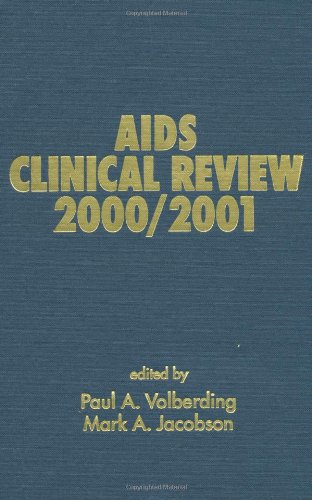
AIDS Clinical Review 2000 2001 1st Edition by Paul A Volberding ISBN 0824704339 9780824704339


Original price was: $50.00.$35.00Current price is: $35.00.
AIDS Clinical Review 2000 2001 1st Edition by Paul A Volberding – Ebook PDF Instant Download/Delivery: 0824704339, 9780824704339
Full download AIDS Clinical Review 2000 2001 1st Edition after payment
Product details:
ISBN 10: 0824704339
ISBN 13: 9780824704339
Author: Paul A Volberding
AIDS Clinical Review 2000 2001 1st Table of contents:
1 Human Immunodeficiency Virus Prevention: Applying the Lessons Learned
I. Intervention Strategies: Levels of Intervention
A. Individual and Small-Group Counseling Interventions
1. Project RESPECT
2. The NIMH Multisite HIV Prevention Trial
3. The Texas Trial
4. The Voluntary Counseling and Testing Efficacy Study
B. Couples Interventions
C. Institutional-Level Interventions
1. The Thai Army Project
2. The Zimbabwe Factory Project
3. School-Based Interventions
4. Abstinence-Only Programs
5. Sexuality and HIV Education Programs
D. Community-Level Interventions
E. Policy/Legal-Level Interventions
II. Where are the Needs?
A. Men Who Have Sex with Men (MSM)
B. Inner-City Women at High Risk for HIV Infection
C. Young Women in Their Teens
D. Populations Whose Risk Behaviors Are Influenced by Alcohol
E. HIV-Infected Persons
III. What Can We Recommend Now?
IV. Conclusion
References
2 Novel Strategies Toward the Development of an Effective Vaccine to Prevent Human Immunodeficiency Virus Infection or Acquired Immunodeficiency Virus
I. How Aids Vaccine Strategies Have Evolved from Sterilizing Immunity to the Control of Infection
II. Live Attenuated Vaccines: Concepts to Learn
III. Novel Strategies
A. Fusion-Competent Env-Based Vaccine
B. Vaccines Based on Naked DNA and Live Vectors Expressing Env Alone or Associated with Other Viral Genes (MVA, Canarypox, Fowlpox, Adenovirus, Alphaviruses)
1. Vaccinia
2. Canarypox
3. Fowlpox
4. Adenovirus
5. Alphaviruses
C. Polyepitope Vaccines
D. Vaccine Based on Regulatory Genes: Tat, Rev, Nef
1. Tat
2. Tat and Rev
3. Tat, Rev, Nef
E. Alloimmunization for Anti-HIV Vaccine
IV. Conclusions and Perspectives
Acknowledgments
References
3 Pediatrie Human Immunodeficiency Virus Type 1 Infection: Updates on Prevention and Management
I. Introduction
II. Maternal and Obstetrical Factors Associated with Perinatal HIV-1 Transmission
A. Breastfeeding
B. Exposure to Maternal Blood and Virus
C. Antiretroviral Prophylaxis of the Infant
D. Obstetrical Management
III. Antiretroviral Therapy for HIV-1-Infected Children
IV. Summary
References
4 Risk of Human Immunodeficiency Virus Infection in Health Care Workers
I. Introduction
II. Anecdotal Case Reports of Occupational HIV Infection
III. Prospective Cohort Studies
IV. Prevention
V. Management of Occupational Exposure
VI. HIV-Infected Health Care Workers: Risks to Patients
VII. Conclusion
References
5 Can Immune Responses to Human Immunodeficiency Virus Be Preserved, Enhanced, or Restored?
I. Introduction
II. Components of Protective Immunity in HIV Infection
III. Why Does the Immune System Fail to Control HIV?
IV. Effects of Highly Active Antiretroviral Therapy (Haart) on HIV-Specific Immune Responses
V. Rebuilding the Immune System in Chronic HIV Infection
VI. Critical Need for Immunotherapy Plus Haart in Augmenting Immunity to HIV
VII. Approaches to Immune Enhancement in HIV Infection
VIII. Conclusions and Future Directions
References
6 Reconstitution of Immunity Against Opportunistic Infections in the Era of Potent Antiretroviral Therapy
I. Introduction
II. PCP
III. MAC
IV. CMV
V. Toxoplasmosis
VI. Systemic Mycoses
VII. Summary
References
7 Salvage Therapy for Patients Failing their Current Antiretroviral Regimen
I. Background
II. Defining Virologic Failure
III. When to Switch Therapy
IV. Devising Salvage Therapy
V. Salvage Therapy in Patients Failing PI-Containing Regimens: Clinical Trial Results
A. PI-Containing Salvage Regimens
1. IDV/NRTIs after Saquinavir (SQV) Failure
2. Nelfinavir (NFV)/Adefovir/EFV/ABC after IDV/NRTI Failure.
3. Amprenavir (APV)/ABC/EFV after PI Failure
B. Dual PI Salvage Therapy
1. RTV/SQV-based Salvage Regimens
2. Investigational PI Agents for Salvage Therapy
VI. Role of Intensification Strategies
VII. Predictors of Treatment Response
A. Baseline CD4 Cell Count, PIasma HIV RNA, and Virologic Response
1. Initial Single PI-Containing Regimen
2. Virologic Response to Second PI-containing Regimens
3. Dual PI-Based Regimens
B. Advanced HIV Disease and Treatment Response to PI-Containing Therapy
C. Genotypic and Phenotypic Resistance as Predictors of Treatment Response
1. Virologic Response to NFV Salvage Therapy
2. Predictors of Response to ABC
3. Phenotypic Resistance to PIs and Treatment Response
4. Differences in Phenotypic Susceptibility to Pis after Failing Initial PI-Containing Regimen
VIII. Role of Genotypic and Phenotypic Resistance Assays in Devising Salvage Therapy
A. Genotypic Resistance Testing
B. Phenotypic Susceptibility Testing as Predictor of Treatment Response
C. Role of Resistance Testing in Newly HIV-Infected Patients with Resistance Mutations
IX. Structured Treatment Interruptions
X. Multidrug Rescue Regimens
A. Dual PI (RTV/IDV) Therapy plus EFV and ddl/Hydroxyurea
B. Achieving Viral Load Suppression < 20 copies/mL on Mega-HAART
XI. Conclusions
References
8 Drug Interactions of Antiretroviral Agents
I. Overview
II. Interpretation of Drug Concentrations
III. Interaction Types
IV. Inhibitor and/or Inducer
V. Nucleoside Reverse Transcriptase Inhibitors
A. Intracellular Interactions
B. Extracellular Interactions
C. Pharmacokinetic Application
D. Clinical Application
VI. PI Combinations
A. Pharmacokinetic Application
1. RTV/IDV
2. RTV/SQV
3. RTV/NFV
4. FTV/NFV/IDV
5. APV
B. Clinical Application
VII. NNRTI and PI COMBINATIONS
A. DLV Interactions
B. NVP Interactions
C. EFV Interactions
D. Clinical Application
VIII. Management of Non-ARV Drug Interactions
A. Antibiotics
1. Antimycobactehal Agents
2. Macrolide/Azalide
B. Antifungals
C. Ribavirin
D. Anticonvulsants
E. Oral Contraceptives and Lipid-Lowering Agents
F. Sildenafil
IX. Conclusion
References
9 Rationale for Immune-Based Therapies for Human Immunodeficiency Virus Type 1 Infection
I. Rationale for Immune-Based Therapies
II. Host-Directed Therapies
A. Hydroxyurea
B. Mycophenolate Mofetil
III. Cytokines and Growth Factors
A. Interleukin-2
B. Granulocyte-Macrophage Colony-Stimulating Factor (GM-CSF)
IV. Enhancement of HIV-1-Specific Immuneresponses
A. Scheduled Treatment Interruptions
B. Therapeutic Immunization
V. Conclusion
References
10 Human Immunodeficiency Virus and Hepatitis B and C Coinfection: Pathogenic Interactions, Natural History, and Therapy
I. Introduction
II. HIV AND HBV
A. Epidemiology and Prevention
B. Pathogenesis of HBV and Effects of Immunosuppression with HIV
C. Natural History of HBV in HIV-Infected Individuals
1. Effects of HIV on Histological Markers
2. Effects of HBV on HIV
3. Effect of Immune Reconstitution on HBV
D. Therapy
III. HIV AND HCV
A. Epidemiology of HCV/HIV Coinfection
1. Pitfalls in the Diagnosis of HCV in the HIV-Positive Individual
2. Cotransmission of HIV and HCV
B. Pathogenic Interactions
C. Natural History of HCV and HIV
1. Effect of HIV on HCV Viral Load
2. Effect of HIV on Progression of HCV Liver Disease: Clinical Data
3. Effect of HIV on Progression of HCV Liver Disease: Histology
4. Effect of HCV on HIV Progression
5. Effect of Antiretroviral Therapy and Immune Reconstitution on HCV
D. Therapy
1. Interferon Alfa
2. Ribavirin
3. Future Directions in HCV Therapy for Coinfected Individuals
4. Prevention of Hepatitis A Virus (HAV) Infection
IV. Conclusion
People also search for AIDS Clinical Review 2000 2001 1st:
clinical aids
b band-aids
biomedical research and clinical reviews
clinical aids info
aids 200 cd4
Tags:
Paul A Volberding,AIDS Clinical