

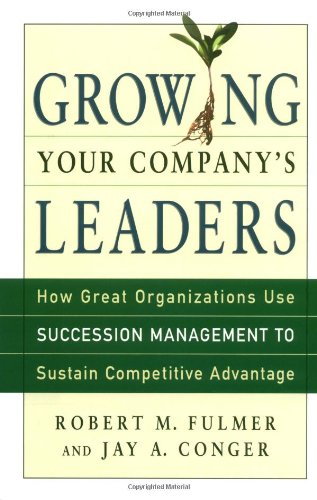
Growing Your Company s Leaders How Great Organizations Use Succession Management to Sustain Competitive Advantage 1st Edition by Robert M Fulmer, Jay Alden Conger ISBN 0814407676 9780814407677


Original price was: $50.00.$35.00Current price is: $35.00.
Growing Your Company s Leaders How Great Organizations Use Succession Management to Sustain Competitive Advantage 1st Edition by Robert M Fulmer, Jay Alden Conger – Ebook PDF Instant Download/Delivery: 0814407676, 9780814407677
Full download Growing Your Company s Leaders How Great Organizations Use Succession Management to Sustain Competitive Advantage 1st Edition after payment
Product details:
ISBN 10: 0814407676
ISBN 13: 9780814407677
Author: Robert M Fulmer, Jay Alden Conger
Growing Your Company s Leaders How Great Organizations Use Succession Management to Sustain Competitive Advantage 1st Table of contents:
-
Chapter 1: Succession Management: The New Imperative
-
The Old Ways
-
The Reinvention
-
Why the Renewed Interest Today?
-
The Purpose of Effective Succession Management Systems
-
Characteristics of Best Practice Approaches
-
The Key Dimensions of an Effective System
-
Corporate Strategy
-
Sponsors and Owners
-
Talent Identification and Talent Pools
-
Developmental Linkages
-
Assessors
-
Tracking
-
Metrics
-
Our Purpose
-
-
-
Chapter 2: Who Should “Own” Succession Management?
-
The Most Critical Owner and Champion: The CEO and the Senior Team
-
Human Resources: The Process Owners
-
Ownership Below the Executive Level: The Implementers
-
Conclusion
-
-
Chapter 3: Defining and Identifying Talent
-
Competency Models: The Benchmarks for Succession
-
Sample Competency Models in Best Practice Organizations
-
Identification Tools
-
Lilly’s “Talent ID Tool”
-
Sonoco’s Performance/Promotability Matrix
-
Bank of America
-
Focusing Efforts: Determining the “Mission‑Critical” Positions
-
Determining the Talent Pools
-
Sample Best Practice Approaches to Talent Pools
-
Insights from the Research
-
-
Chapter 4: Linking Succession to Development
-
Weaving Development into Succession
-
The Tools They Use
-
PanCanadian’s Leadership Development Framework
-
Tool #1 — Internal Leadership and Executive Education
-
Tool #2 — Action Learning and Special Job Assignments
-
Tool #3 — Mentoring and Coaching
-
Tool #4 — External University Courses
-
Tool #5 — Web‑Based Courses
-
Tool #6 — Career Planning and Individual Profiling
-
Tool #7 — Performance Management and 360‑Degree Feedback
-
-
Conclusion and Summary Insights from the Research
-
-
Chapter 5: Measuring and Assuring Long‑Term Success
-
What Is Measured?
-
Dow Chemical
-
Eli Lilly and Company
-
Sonoco
-
Dell Computer
-
PanCanadian
-
Bank of America
-
Lessons for Long‑Term Success
-
Bank of America
-
Dell Computer
-
Dow Chemical
-
Eli Lilly and Company
-
Sonoco
-
-
Other Lessons for Success
-
Smooth Transitions
-
The “Right” Developmental Assignments
-
Meaningful Appraisals and Feedback
-
Appropriate Selection Criteria
-
A Range of Good Choices
-
-
Conclusions About Assessment and Long‑Term Success
-
-
Chapter 6: The Future of Succession Management: Bright Lights, Looming Clouds
-
Bright Lights on the Horizon: Promising Trends for Succession Management
-
Greater Integration and Alignment
-
Technology Moves Succession Planning to the Desktop
-
Increased Rigor in Assessments
-
-
The Looming Clouds in Succession’s Future
-
Finding a Sufficient Supply of Developmental Opportunities
-
Generational Resistance to Certain Opportunities
-
Inconsistencies in Selection Criteria and Rewards
-
Competency Models — A Flawed Foundation for Development?
-
360‑Degree Feedback as an Administrative Requirement: Weakening a Powerful Development Tool?
-
-
The Essentials for Successful Succession
-
Implementing a New System
-
The Foundations for Genuine Success
-
-
People also search for Growing Your Company s Leaders How Great Organizations Use Succession Management to Sustain Competitive Advantage 1st:
growing your own leaders refers to the idea
growing your company
growing your employees
growing your linkedin company page
growing leadership
Tags: Robert M Fulmer, Jay Alden Conger, Organizations, Succession