

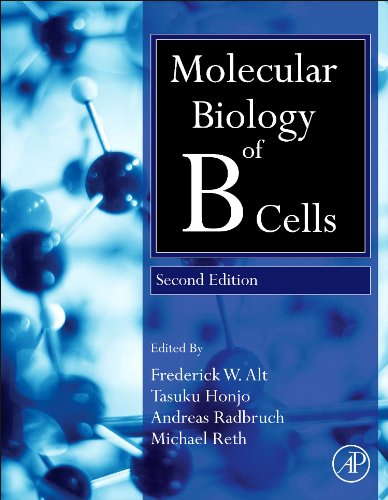
Molecular Biology of B Cells 2nd Edition by Tasuku Honjo, Michael Reth, Andreas Radbruch, Frederick Alt ISBN 0123984904 9780123984906

Original price was: $50.00.$35.00Current price is: $35.00.
Molecular Biology of B Cells 2nd Edition by Tasuku Honjo, Michael Reth, Andreas Radbruch, Frederick Alt – Ebook PDF Instant Download/Delivery: 0123984904, 9780123984906
Full download Molecular Biology of B Cells 2nd Edition after payment
Product details:
ISBN 10: 0123984904
ISBN 13: 9780123984906
Author: Tasuku Honjo, Michael Reth, Andreas Radbruch, Frederick Alt
Molecular Biology of B Cells, Second Edition is a comprehensive reference to how B cells are generated, selected, activated and engaged in antibody production. All of these developmental and stimulatory processes are described in molecular, immunological, and genetic terms to give a clear understanding of complex phenotypes.
Molecular Biology of B Cells, Second Edition offers an integrated view of all aspects of B cells to produce a normal immune response as a constant, and the molecular basis of numerous diseases due to B cell abnormality. The new edition continues its success with updated research on microRNAs in B cell development and immunity, new developments in understanding lymphoma biology, and therapeutic targeting of B cells for clinical application. With updated research and continued comprehensive coverage of all aspects of B cell biology, Molecular Biology of B Cells, Second Edition is the definitive resource, vital for researchers across molecular biology, immunology and genetics.
Molecular Biology of B Cells 2nd Table of contents:
Chapter 1. The Structure and Regulation of the Immunoglobulin Loci
-
Introduction
-
Genomic Organization of the Mouse Immunoglobulin Heavy Chain Locus
-
Genomic Organization of the Mouse Immunoglobulin Kappa Light Chain Locus
-
Genomic Organization of the Mouse Immunoglobulin Lambda Light Chain Locus
-
B Cell Development and Regulation of V(D)J Recombination
-
Junctional Diversity
-
Combinatorial Diversity
-
Noncoding Transcription and Immunoglobulin Locus Rearrangement
-
The Process of Dh–Jh Recombination
-
Epigenetics and Immunoglobulin Locus Rearrangement
-
Insulators and Immunoglobulin Locus Rearrangement
-
3D Structure and Compaction of the Immunoglobulin Heavy Chain Locus
-
Conclusion
Chapter 2. The Mechanism of V(D)J Recombination
-
Overview
-
Antigen Receptor Gene Assembly
-
Recombination Signal Sequences
-
Biochemistry of V(D)J Cleavage
-
RAG1 and RAG2
-
A Role for HMGB1 in V(D)J Recombination
-
Recombination Complexes: Analysis of Stoichiometry and Organization
-
V(D)J Recombination Is Tightly Regulated during Lymphocyte Development
-
Accessibility Model of Regulation
-
Overview of Chromatin Structure
-
Regulation by Nucleosome Structure and Histone Acetylation
-
Regulation by Histone Methylation
-
How Is the Chromatin Structure of Antigen Receptor Loci Developmentally Regulated?
-
Additional Layers of Regulation
-
Regulation of V(D)J Recombination: Summary
-
Oncogenic Lesions in Lymphoid Neoplasms: The Price of a Diverse Antigen Receptor Repertoire
-
Proposed Mechanisms Underlying RAG-Mediated Genomic Lesions
-
Regulatory Controls Proposed to Suppress RAG-Mediated Genomic Instability
-
V(D)J Recombination Errors as Pathogenic Lesions in Lymphoid Neoplasms: Summary
Chapter 3. Transcriptional Regulation of Early B Cell Development
-
PU.1 Sets the Stage for Lymphoid and Myeloid Development
-
Lineage Priming in Lymphoid Progenitors by Ikaros
-
E2A Regulates the Chromatin Landscape to Promote Gene Expression in B Cell Development
-
E2A Is Inhibited by Id Proteins
-
Interleukin-7/Stat5 Signaling Provides an Early Signal for B Cell Lineage Specification
-
Early B Cell Factor: Central Coordinator of B Cell Development
-
Collaboration between EBF1 and Foxo1
-
Regulation of the B Cell–Specific Program by Pax5
-
Regulation of B Lineage Commitment
-
Conclusion
Chapter 4. Relationships among B Cell Populations Revealed by Global Gene Analysis
-
Introduction
-
Gene Profile Changes with B Cell Maturation Suggest an Ordering of Transitional Stages
-
Distinctions in Gene Networks Activated in Mature B Cell Populations
-
Fo/B2 B Cells in Different Tissues are Similar, but Specialization with Location Emerges
-
Conclusions
Chapter 5. Roles of MicroRNAs in B Lymphocyte Physiology and Oncogenesis
-
Introduction
-
Control of Cell Survival and Proliferation by Mir-17∼92 in B Cell Development and Lymphomagenesis
-
The Problem of MiRNA Target Identification and Validation
-
Mir-155 in Germinal Center B Cells and Lymphomagenesis
-
Discovery of an Elusive Tumor Suppressor: Mir-15a∼16-1 Cluster
-
Lin28b Regulates the Fetal–Adult B Cell Development Switch
-
To Be Further Determined
-
Concluding Remarks
Chapter 6. Proliferation and Differentiation Programs of Developing B Cells
-
Proliferation and Differentiation Programs at the Pro-B Cell Stage
-
Proliferation and Differentiation Programs at the Pre-B Cell Stage
-
Selection Mechanisms at the Immature B Cell Stage
Chapter 7. Development and Function of B Cell Subsets
-
Introduction
-
B-1, Marginal Zone and Follicular B Cells
-
Mechanisms for the Compartmentalization of B-Cell Subsets
-
Selection and Differential Survival Mechanisms: BCR Signaling, Composition, and Specificity
-
Other Factors Involved in the Formation of B-Cell Subsets
-
Homeostasis of B-Cell Subsets and Repertoires
-
Conclusion
Chapter 8. B Cells and Antibodies in Jawless Vertebrates
-
Introduction
-
Lampreys and Hagfish Have Three Types of VLR Genes
-
VLR Gene Assembly Mechanism and Sequence Diversity
-
Lamprey CDA1 and CDA2
-
VLRA, VLRB, and VLRC Are Expressed by Different Lymphocyte Populations
-
Characterization of B-Like and Two T-Like Lymphocyte Populations in Cyclostomes
-
VLRA+, VLRB+, and VLRC+ Cells Have Distinct Gene Expression Profiles
-
Generation of the T-Like and B-Like Cells in Lampreys
-
The Unique Structure of VLRB Antibodies
-
VLRB Monoclonal Antibodies
-
Structure of VLR Antigen-Binding Domains
-
Structures of VLRB Antibody–Antigen Complexes
-
Conclusion
Chapter 9. The Origin of V(D)J Diversification
-
The Alien Seed
-
The Evolution of BCR and TCR Loci
-
Considerations on the ur-V Gene
-
Concluding Remarks
Chapter 10. Structure and Signaling Function of the B-Cell Antigen Receptor and Its Coreceptors
-
Introduction
-
Basic Structure of the BCR Complex
-
BCR Activation Models
-
The Resting State of the BCR
-
Interaction of the BCR with Signal-Transducing Kinases and Adaptors
-
BCR Coreceptors CD19 and CD22
-
CD19 Functions in a Complex with CD21 and CD81
-
Signaling by the CD19 Tail
-
Human Mutations in the CD19/Cd21/Cd81 Complex
-
CD22: An Inhibitory Receptor
-
Regulation of CD22 Signaling by Ligand Interactions
-
The Role of CD22 in Preventing Autoimmunity
-
BCR-Controlled Signaling Processes
-
BCR-Mediated Adaptor and PLCγ2 Activation
-
IP3 Promotes Calcium Release and Activation of Nuclear Factor of Activated T Cells
-
DAG and Nuclear Factor-κB Activation
-
Activation of the PI3K Pathway
-
Akt and Foxo Regulation
Chapter 11. Fc and Complement Receptors
-
Consequences of FCγRIIB Deficiency
-
Consequences of Complement and Complement Receptor Deficiencies
-
FC Receptors
-
Complement Receptors
-
Coreceptor Signaling versus Antigen Localization to FDCs
-
Frontiers: Complement versus FC Receptors
Chapter 12. B Cell Localization and Migration in Health and Disease
-
Introduction
-
Migration of B Cells in the Bone Marrow
-
Migration of B Cells into and within SLOs
-
Location and Migration of Antibody-Secreting Cells
-
Body Cavity B-1 B Cell Trafficking
-
Mucosal B Cell Migration
-
Homing of B Cells during Chronic Inflammation and Tertiary Lymphoid Organ Formation
-
Migration of Neoplastic B Cells
-
Conclusion
Chapter 13. B Cells as Regulators
-
Introduction
-
Regulatory Role of B Cells in UC
-
Protective Function of B Cells in EAE
-
Regulatory Roles of B Cells in Systemic Lupus Erythematosus
-
Regulatory Role of B Cells in Bacterial Infections
-
Characterization and Function of IL-10-Producing B Cells in Humans
-
Concluding Remarks
Conflict of Interest
Chapter 14. B Cell Memory and Plasma Cell Development
Chapter 14a. Generation of Memory B Cells
Chapter 14b. Plasma Cell Biology
Chapter 14c. Memory Plasma Cells
Chapter 15. The Role of the BAFF and Lymphotoxin Pathways in B Cell Biology
-
BAFF/APRIL: Important Regulators of B Cell Survival, Homeostasis, and Function
-
The Lymphotoxin Pathway: Shaping B Cell Environments
-
Conclusions and Perspectives
Chapter 16. The Mucosal Immune System: Host–Bacteria Interaction and Regulation of Immunoglobulin A Synthesis
-
Introduction
-
Geography, Regulation, and Properties of Gut Immunoglobulin A
-
Synthesis of Gut Immunoglobulin A
-
T Cell-Dependent Immunoglobulin A Induction
-
T Cell-Independent Immunoglobulin A Induction
-
Function of Immunoglobulin A
-
Clinical Relevance
-
Conclusions
Chapter 17. Gut Microbiota and Their Regulation
-
Microbiota
-
Microbes, Primary Ig Diversification, and Early Life B Cell Selection
-
Microbial Influence on IgA Production
-
Microbial Influence on IgE Production
-
B-Lineage Cell Influence on Commensal Microbes
-
Concluding Remarks
Chapter 18. Molecular Mechanisms of AID Function
-
Introduction
-
AID Structure and Function
-
AID’s Molecular Mechanism of DNA Cleavage and Recombination
-
The Mechanism of AID’s Specificity Determination for DNA Cleavage
-
Regulation of AID Expression
-
Concluding Remarks
Chapter 19. The Mechanism of IgH Class Switch Recombination
-
Antibody Class
-
Organization of Mouse IgH Locus
-
A Two-Step Model of CSR
-
Mechanisms by Which AID Initiates CSR and SHM
-
Germline S Region Transcription Targets AID Activity during CSR
-
Role of Transcription Stalling in AID Targeting
-
AID Cofactors Facilitate AID Access to Its ssDNA Substrates
-
Differential AID Targeting and Outcomes during CSR and SHM
-
Long-Range Joining of S Region Breaks
-
Classical Nonhomologous End Joining
-
Alternative End Joining
-
Chromosomal Translocation in Lymphomas Caused by Aberrant CSR
-
Evolution of the IgH CSR Mechanism
Chapter 20. Somatic Hypermutation: The Molecular Mechanisms Underlying the Production of Effective High-Affinity Antibodies
-
Introduction
-
Activation-Induced Cytidine Deaminase in Somatic Hypermutation
-
Targeting of the SHM
-
Activation-Induced Cytidine Deaminase and Downstream Repair Pathways
-
Mismatch Repair in Somatic Hypermutation
-
Base Excision Repair in Somatic Hypermutation
-
Conclusion
Chapter 21. Aberrant AID Expression by Pathogen Infection
-
Introduction
-
Physiologic Role of Activation-Induced Cytidine Deaminase
-
AID Induction in B Cells
-
Regulation of AID Expression in B Cells
-
Aberrant AID Expression by Pathogen Infection and Tumorigenesis
-
Conclusion
Chapter 22. Molecular Pathogenesis of B Cell Lymphomas
-
Introduction
-
The Cell of Origin of Lymphomas
-
Mechanisms of Genetic Lesion in Lymphoma
-
Molecular Pathogenesis of Most Common Lymphoma Types
Chapter 23. B Cells Producing Pathogenic Autoantibodies
-
Origin of Autoantibodies
-
Immunodeficiency, B Cell Malignancy, and Autoreactivity
-
Features of Pathogenic Autoantibodies
-
Effector Mechanisms of Pathogenic Autoantibodies
-
B Cells as the Therapeutic Target in Autoimmune Disease
-
Conclusion
Chapter 24. The Cellular and Molecular Biology of HIV-1 Broadly Neutralizing Antibodies
-
Introduction
-
Highly Conserved Structures on HIV-1 Env
-
Mechanisms of HIV-1 Neutralization by Antibodies
-
Role of Neutralizing Antibodies in Protection from HIV-1 Transmission
-
Biology of Broad Neutralizing Antibody Development
-
Characteristics of HIV-1 Env Neutralizing Antibodies
-
HIV-1 Env Antibodies Induced by Current HIV Vaccine Candidates
-
New Strategies for Induction of HIV-1 bnAbs
-
Summary
Chapter 25. Immune Deficiencies Caused by B Cell Defects
-
Defects in B Cell Development
-
Defects in B Cell Migration
-
Defects in B Cell Survival
-
Defects in B Cell Activation
-
PADs with Unknown Etiology
-
Therapeutic Approaches
-
Conclusion
Chapter 26. IMGT® Immunoglobulin Repertoire Analysis and Antibody Humanization
-
IMGT® and the Birth of Immunoinformatics
-
Fundamental Information from IMGT-ONTOLOGY Concepts
-
IMGT® Immunoglobulin Repertoire Analysis
-
IMGT® Antibody Engineering and Humanization
-
Conclusion
-
Availability and Citation
People also search for Molecular Biology of B Cells 2nd:
Islamist Movements
Jihadism
Afghan Conflict
Radical Islam
Taliban History
Terrorism in South Asia
Tags: Tasuku Honjo, Michael Reth, Andreas Radbruch, Frederick Alt, Molecular Biology