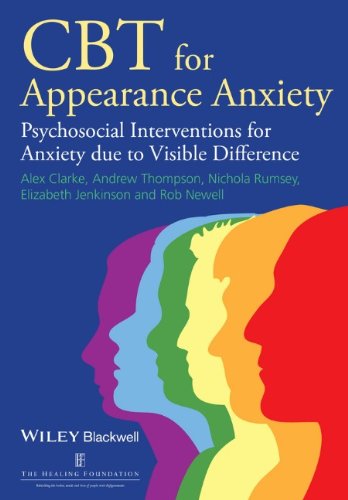
CBT for Appearance Anxiety Psychosocial Interventions for Anxiety due to Visible Difference 1st Edition by Alex Clarke, Andrew R. Thompson, Elizabeth Jenkinson, Nichola Rumsey, Robert Newell – Ebook PDF Instant Download/Delivery: 1118523423, 978-1118523421
Full download CBT for Appearance Anxiety Psychosocial Interventions for Anxiety due to Visible Difference 1st Edition after payment

Product details:
ISBN 10: 1118523423
ISBN 13: 978-1118523421
Author: Alex Clarke, Andrew R. Thompson, Elizabeth Jenkinson, Nichola Rumsey, Robert Newell
This clinical manual provides a CBT-based psychosocial intervention for use with individuals distressed about their appearance due to a disfigurement from birth, accident or illness, or those coping with another visible difference.
- Contains a wealth of case material with specific relevance to physical health conditions that affect appearance, practical advice on assessment, and session-by-session guidance for addressing common issues
- Written by leading academics and clinicians working in the management of disfigurement and rational appearance anxiety
- Uses a flexible stepped-care model that allows for use by experienced CBT practitioners as well those wishing to deliver a more basic psychological intervention
- Identifies the psychological factors involved in appearance anxiety while also addressing the practical concerns of living with a visible difference, such as managing the reactions of others
CBT for Appearance Anxiety Psychosocial Interventions for Anxiety due to Visible Difference 1st Table of contents:
1. Clinical Background and Treatment Considerations
Physical and Treatment-Related Factors
- Addressing medical issues and treatment outcomes.
Socio-Cultural Factors
- Influence of culture, family, and society on treatment and self-perception.
Psychological Factors and Processes
- Impact of psychological elements like body image, emotional reactions, and cognitive processes.
Body Image Disturbance
- Overview of how body image issues manifest in clinical settings.
Clinical Problems and Presentation
- Common clinical features observed in patients with appearance-related concerns.
Common Features in Referral
- Typical reasons for seeking treatment and referral patterns.
Treatment Considerations
- Key factors to keep in mind when designing a treatment plan.
2. A Stepped-Care Approach to Psychosocial Intervention
The PLISSIT Model
- A framework for managing sexual and psychosocial issues in appearance-related conditions.
3. Models and Frameworks
Explanation for Choice of Therapeutic Approach
- Rationalizing the selection of therapy based on individual needs.
Behavioral Approaches:
- Fear Avoidance: Understanding avoidance behaviors related to appearance.
- Social Skills Training: Building social competence to improve confidence.
Building an Evidence Base
- Importance of data-driven approaches to validate treatment efficacy.
Cognitive Approaches:
- Comparison of Appearance Anxiety and Social Phobia: Drawing parallels to anxiety disorders.
Summary
- A recap of key points related to psychosocial frameworks and therapy models.
Deriving a Cognitive Behavioral Treatment Model
- Identifying factors contributing to successful adjustment to visible differences.
The ARC Research Programme Findings
- Insights from the ARC program on treatment effectiveness and methodologies.
Summary
- Summary of models, approaches, and their contributions.
4. Clinical Assessment
Eliciting the Problem
- Identifying key concerns through careful questioning and evaluation.
Summarizing
- Condensing the information gathered during assessment for clarity.
Motivation and Self-Efficacy
- Evaluating a patient’s readiness and confidence in managing their condition.
Readiness for Change
- Assessing whether a patient is ready to engage in treatment.
Measurement Tools
- Utilizing assessment tools to track progress and treatment outcomes.
Regular Subjective Measures of Frequency for Events, Thoughts, and Feelings
- Monitoring key psychological and emotional states over time.
Goal Setting
- Using the SMART acronym (Specific, Measurable, Achievable, Relevant, Time-bound) to set goals.
Challenges in Treatment for Appearance-Related Problems
- Recognizing and addressing barriers to treatment.
5. Social Skills and Coping Strategies
Staring, Questions, Comments, and Loss of Anonymity
- How to manage the reactions of others to visible differences.
Making the Most of Appearance
- Empowering individuals to develop a positive outlook on their appearance.
Developing a Positive Approach to Visible Difference
- Techniques to foster resilience and a positive self-image.
Developing Verbal Skills
- Training patients to respond confidently in social situations.
Managing Staring
- Coping mechanisms to deal with attention and unwanted focus.
Putting it into Practice
- Practical applications of coping skills in real-life situations.
Taking the Initiative in Social Encounters
- Encouraging proactive social engagement.
Managing Anger and Developing Assertiveness
- Addressing frustration and building assertive communication.
Managing Intimacy
- Navigating relationships and intimacy with a visible difference.
Disclosing a Disfiguring Condition to a Partner
- Approaches for open and honest communication in intimate relationships.
Summary
- Consolidating strategies for improving social interactions and self-perception.
6. Cognitive Behavioral Therapy (CBT)
Techniques in Cognitive Behavioral Therapy
- Overview of CBT techniques used in treating appearance-related concerns.
Socratic Dialogue
- Engaging patients in a dialogue to challenge their negative beliefs.
Eliciting Negative Automatic Thoughts
- Helping patients identify and reframe harmful thought patterns.
Manipulating Safety Behaviours
- Addressing behaviors that reinforce anxiety or avoidance.
Cost–Benefit Analyses
- Assessing the trade-offs of current behaviors versus desired outcomes.
Some Techniques for Dealing with Appearance-Related Self-Criticism and Shame
- Addressing self-criticism through functional analysis and reframing techniques.
Functional Analysis of Self-Criticism
- Exploring the underlying causes and effects of self-critical thoughts.
Summary
- Summary of CBT methods and their relevance to appearance concerns.
7. Planning Treatment and Sessional Guides
Introduction
- Overview of treatment planning and structuring sessions.
Working at Different Levels
- Level 1 (Table 7.1): Initial interventions for mild issues.
- Level 2 (Table 7.1): More intensive interventions for moderate concerns.
- Level 3 (Table 7.1): Advanced treatment for severe conditions.
Session 1
- First session goals, assessment, and treatment planning.
Working at Level 3 Using FaceIT (www.faceitonline.org.uk)
- Introduction to the FaceIT online resource for managing visible difference.
Working at Level 4 Using CBT
- Advanced CBT techniques for patients with complex needs.
8. The Emerging Adult
Introduction
- Understanding the transition to adulthood and its impact on appearance-related concerns.
Introducing the Problem of Transition
- Challenges faced by young adults with visible differences.
Transition from Different Perspectives
- Young Person’s Perspective: Unique challenges in this life stage.
- Parents’ Perspective: Understanding family dynamics.
- Health Professionals’ Perspective: How professionals can guide the transition.
Guidance for Improving Transitional Care
- Best practices for supporting young people during this transition.
Issues Pertinent to Caring for Young People with Appearance Concerns
- Specific issues in managing care for adolescents and young adults.
The Salience of Appearance to Young People
- Why appearance is particularly important during this stage of life.
Reluctance to Seek or Accept Support
- Addressing barriers to treatment acceptance in young adults.
Factors that Can Promote Adjustment to a Visible Difference among Young People
- Identifying factors that help young adults cope with visible differences.
Romantic Issues
- Addressing challenges related to dating and relationships.
Transition as an Opportunity for Those with a Visible Difference
- Viewing transition as a chance for growth and self-discovery.
Concluding Remarks
- Summary of key points related to emerging adulthood and appearance concerns.
9. Psychological Assessment for Cosmetic Surgery
Introduction
- Overview of psychological assessments in the context of cosmetic surgery.
Is Cosmetic Surgery Effective?
- Examining the outcomes of cosmetic surgery from a psychological perspective.
Access to Surgery in the NHS
- Discussing access to surgery within the National Health Service.
Psychological Screening by the Surgeon
- Understanding the role of psychological evaluation before surgery.
NICE Guidelines
- Guidelines for assessing candidates for cosmetic surgery.
Onward Referral
- When and how to refer patients for further psychological support.
What Does the Surgeon Want from a Psychological Assessment?
- Surgeons’ expectations in evaluating a patient’s readiness for surgery.
What Does the Patient Want from a Psychological Assessment?
- Patients’ concerns and motivations for undergoing psychological assessments.
A Framework for Psychological Assessment
- A structured approach to evaluating candidates for surgery.
Case Examples
- Illustrative case studies of psychological assessments.
Common Problems in Referral
- Common issues faced during the referral process.
Summary
- Key takeaways related to psychological assessments in cosmetic surgery.
Additional Resources
- Additional materials and resources for professionals.
10. Models of Service Delivery
Lay-Led Support
- Community-based support systems for individuals with appearance concerns.
Specialist Services
- Dedicated services for managing appearance-related issues.
Embedded Services
- Services integrated into broader healthcare systems.
Access to Psychology Services
- How to ensure patients have access to appropriate psychological care.
Access to Mental Health Services
- Facilitating access to mental health support for individuals with appearance-related concerns.
Mapping Service Models onto Stepped Care
- Aligning service delivery models with a stepped-care approach to treatment.
People also search for CBT for Appearance Anxiety Psychosocial Interventions for Anxiety due to Visible Difference 1st :
cbt activities for social anxiety
cognitive behavioral therapy for anxiety pdf
what is cbt for social anxiety
types of cbt for anxiety
steps of cbt for depression
Tags:
Alex Clarke,Andrew Thompson,Elizabeth Jenkinson,Nichola Rumsey,Robert Newell,CBT,Appearance,Anxiety,Psychosocial,Interventions,Anxiety,Visible,Difference 1st