

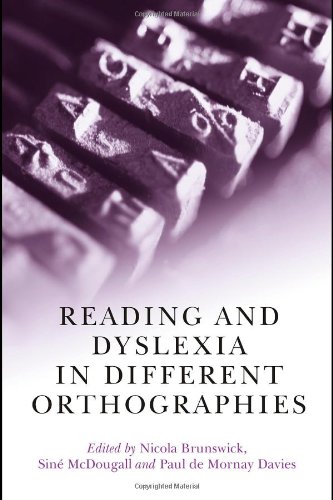
Reading and Dyslexia in Different Orthographies 1st Edition by Nicola Brunswick, Sine McDougall, Paul de Mornay Davies ISBN 0203858468 9780203858462
Original price was: $50.00.$35.00Current price is: $35.00.
Reading and Dyslexia in Different Orthographies 1st Edition by Nicola Brunswick, Sine McDougall, Paul de Mornay Davies – Ebook PDF Instant Download/Delivery: 0203858468, 9780203858462
Full download Reading and Dyslexia in Different Orthographies 1st Edition after payment
Product details:
ISBN 10: 0203858468
ISBN 13: 9780203858462
Author: Nicola Brunswick, Sine McDougall, Paul de Mornay Davies
Reading and Dyslexia in Different Orthographies 1st Table of contents:
Section 1 The development of reading skills in different orthographies
1. Reading and dyslexia in different orthographies: An introduction and overview
Introduction
Orthographies: A historical perspective
Pictograms and ideograms
Logographic, syllabic and alphabetic orthographies
Sumerian cuneiform writing: A logographic orthography
Akkadian: A syllabic orthography
The development of the alphabet
Contemporary writing systems
Logographic writing systems
Syllabic writing systems
Alphabetic writing systems
Contemporary research
Section 1: The development of reading skills in different orthographies
Section 2: Developmental dyslexia in different orthographies
Section 3: Neuroimaging studies of reading in different orthographies
Conclusion
Theory development
Information about the later stages of reading development
Adopting a flexible and multi‑causal approach
Reliable and replicated fMRI studies
References
2. A psycholinguistic grain size view of reading acquisition across languages
Introduction
Phonological awareness and reading
Phonological awareness prior to reading
Structural vocabulary factors that affect phonological development
Syllable structure effects on phonological development in different languages
Levels of phonological awareness in different languages
Becoming aware of syllables
Becoming aware of onsets and rimes
Becoming aware of phonemes
Orthographic effects on learning to read
Orthographic effects on phonological awareness as captured by psycholinguistic grain size theory
Orthographic effects on mapping sounds to letters
Orthographic effects and the rate of reading acquisition
Conclusion: Learning to read in different languages—a universal problem with language‑specific solutions
References
3. Phonological development from a cross‑linguistic perspective
Introduction
Theories of phonological development
Does the evidence support a large‑to‑small sequence of phonological development in English?
Distinguishing between different types of phonological awareness
A cross‑linguistic perspective on phonological development
Study 1: The development of explicit awareness among English and French monolinguals (Duncan, Colé, Seymour, & Magnan, 2006)
Study 2: Phonological development in English, French, Icelandic, Portuguese and Spanish (Duncan et al., 2009)
Overview
The availability of phonological awareness as reading instruction begins
The interaction between literacy acquisition and phonological development
Conclusion
Notes
References
4. Letter position encoding across deep and transparent orthographies
Introduction
Review of previous research with the visual search task
Visual search performance of skilled and developing readers of English
Visual search performance of readers of different writing systems
Visual search performance of readers of orthographies varying in transparency
Recent research investigating the effect of orthographic transparency on letter search performance in skilled and developing readers
Theoretical implications and future developments for research with the visual search task
References
5. Differences in reading ability between children attending Welsh‑ and English‑speaking primary schools in Wales
Introduction
Welsh orthography
Rationale for our study
Participants in our research
The second and third years of formal reading instruction
Performance during the first year of formal reading instruction
Reading at 10 years of age
The underachieving tail of English readers
Are there sex differences in learning to read a transparent orthography?
The selection of word lists in cross‑cultural comparisons
Reading in Wales in 2001/2
Note
Acknowledgements
References
6. Writing a language that you can’t hear
Introduction
The indirect connection between oral and written language and the deaf child
The use of suffixes in spelling by deaf children
Suffix spelling as a predictor of other literacy measures
Can deaf children’s use of the indirect connection between oral and written language be promoted?
Conclusion
Acknowledgements
References
People also search for Reading and Dyslexia in Different Orthographies 1st:
what is reading like for dyslexia
reading and spelling programs for dyslexia
does dyslexia only affect reading and writing
reading programs for dyslexia
reading and spelling disorders
Tags: Nicola Brunswick, Sine McDougall, Paul de Mornay Davies, Dyslexia, Orthographies